





















FAQs
Answers to the questions parents ask The Nesavu most: delivery, payment, sizes, everyday wear and occasion wear, weddings, wholesale, international shipping and our stores. For policies, see our shipping policy, exchange, return and refund policy and kids size guide.
Last updated:
Delivery and ready stock
I need an outfit for an event next week. How fast can The Nesavu deliver?
Every design is ready stock, so there is no stitching wait. Orders placed by 2 PM (Monday to Saturday) usually ship the same day, otherwise within 1–3 business days, and delivery within India takes 2–5 working days after that; Tamil Nadu and Kerala are often quicker, 1–3 days. Use Check delivery on any product page for a date. Most boutiques that stitch to order take 15 to 20 days.
Is everything at The Nesavu ready stock, or made to order?
Everything is ready stock. The Nesavu holds inventory across sizes and colours, so orders are dispatched within 1–3 business days.
How much is shipping within India?
Shipping is free on orders of ₹5,000 or more. Below that, a small fee is shown at checkout: usually ₹80 to ₹110 for one outfit and ₹140 to ₹220 for two or three. It varies a little because we ship from four locations. See our shipping policy.
Does The Nesavu ship internationally?
Yes. The Nesavu ships worldwide, including to the USA, UK, Canada, Australia, Singapore, UAE, Malaysia, Japan, South Africa and the Gulf states. Shipping is calculated by weight and destination, and the exact cost is shown at checkout. Customers outside India are responsible for any customs duties or import taxes charged on arrival.
Payment
Is there cash on delivery?
Not at the moment, sorry! Orders are prepaid: UPI, GPay, PhonePe, cards and net banking all work, and international cards too.
I live abroad. Can I order for family in India?
Yes, happily. Pay with any international card (prices are shown in rupees and your bank converts at checkout), enter the Indian delivery address, and the outfit arrives in the usual 1–5 working days with no customs duties. Our team can confirm the size on WhatsApp if you are unsure.
Sizes, returns and exchanges
What ages does The Nesavu dress?
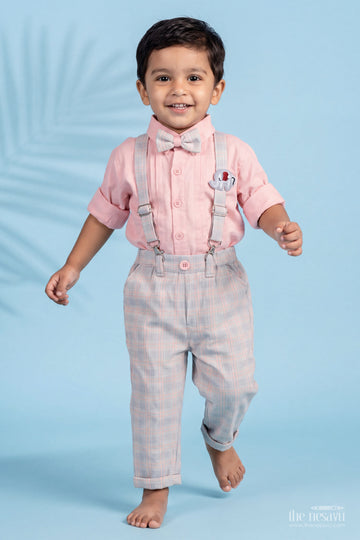
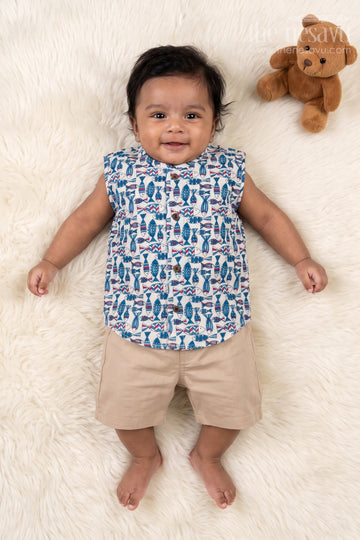
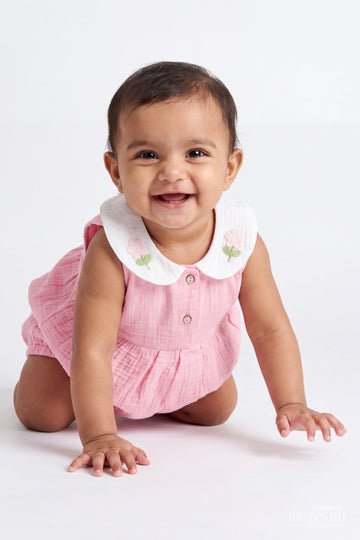
From newborn sizes up to 12 years for girls and boys, plus a women's range. Baby styles are grouped under baby clothes.
How do I choose the right size?
Use the Nesavu size chart, which lists the finished outfit's chest, waist and length by age for each style, or tap Find my size on any product page. If your child is between two sizes, pick the bigger one.
What if the size doesn't fit?
You can request one free size exchange within 7 days of delivery (unused, tags on). Returns and refunds follow our exchange, return and refund policy.
How should I wash the outfits?
Occasion wear with silk, zari or embroidery (pattu pavadai, lehengas, sharara sets, silk frocks, kurta and dhoti sets) is best dry washed. Everyday cotton and chanderi pieces take a gentle hand wash in cold water, dark colours separately, dried in shade and ironed inside out. Each product page has a Fabric and care section.
Everyday wear and styles
Does The Nesavu sell everyday clothes, or only festival wear?
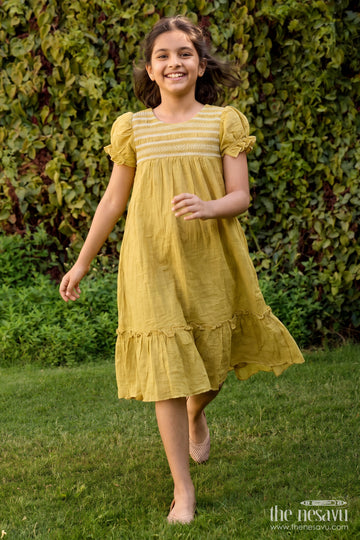
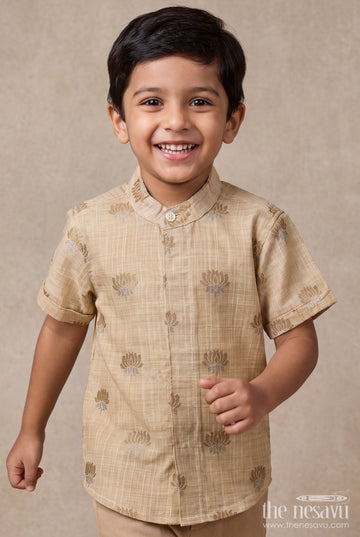
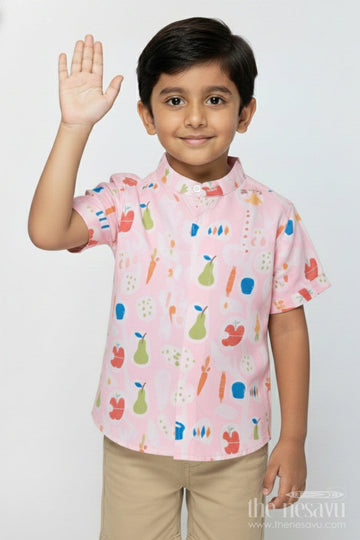
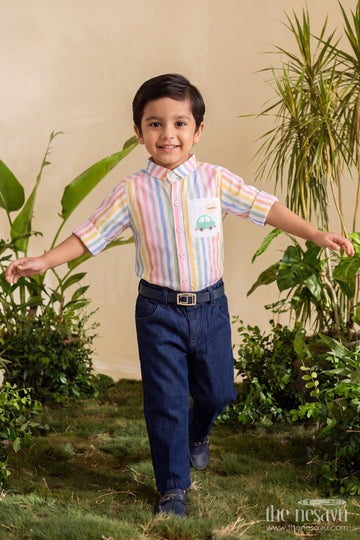
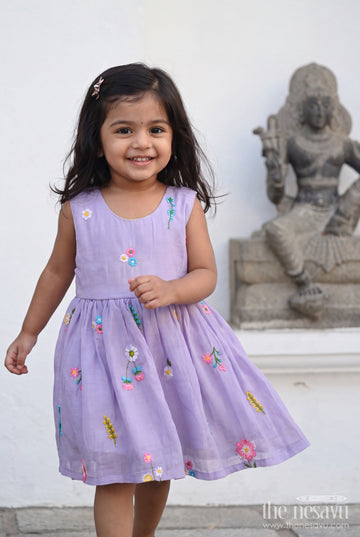
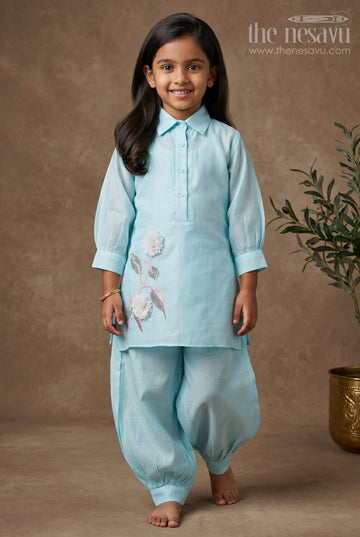
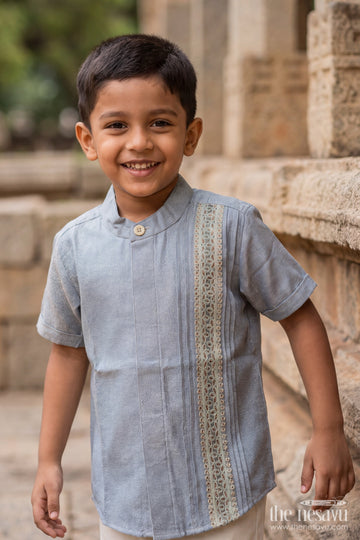
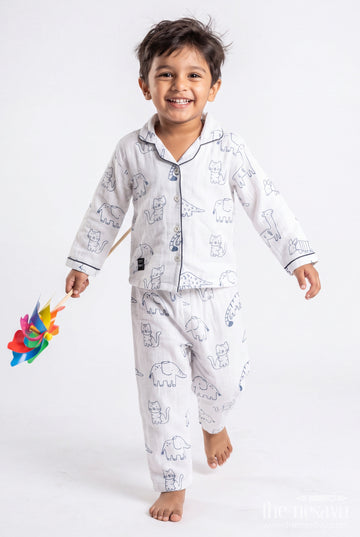
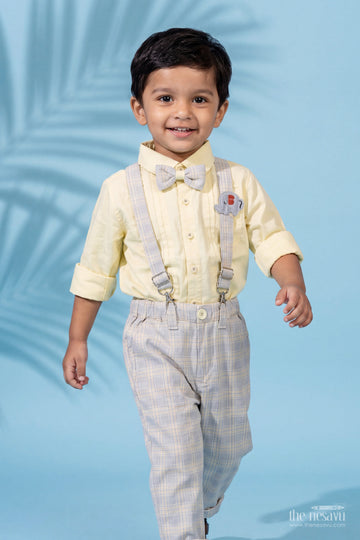
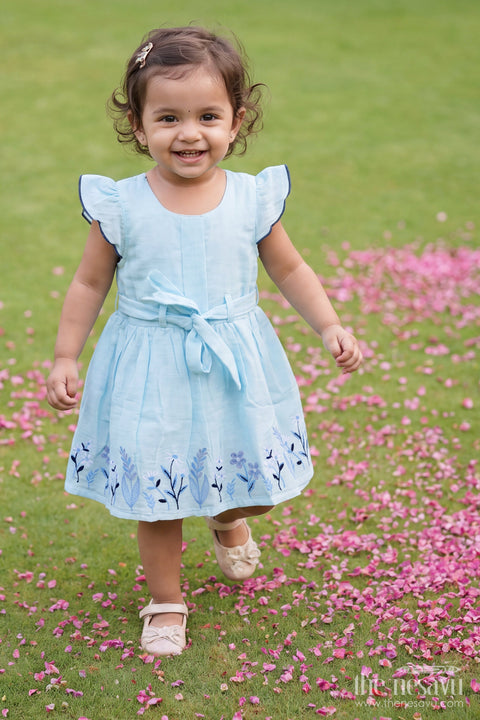
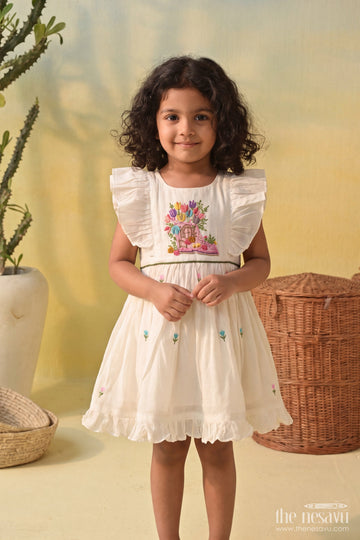
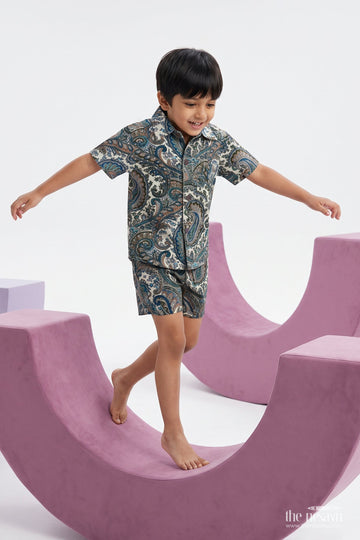
Both, split roughly evenly. Everyday: pure cotton frocks, mul chanderi frocks, muslin co-ord sets, dungarees, jumpsuits, cotton and linen shirts. Occasion: pattu pavadai, lehengas, sharara sets, silk frocks and vestis. The Nesavu does not carry denim or T-shirts. Browse girls cotton frocks, girls co-ord sets and boys shirts.
Does The Nesavu sell South Indian or North Indian styles?
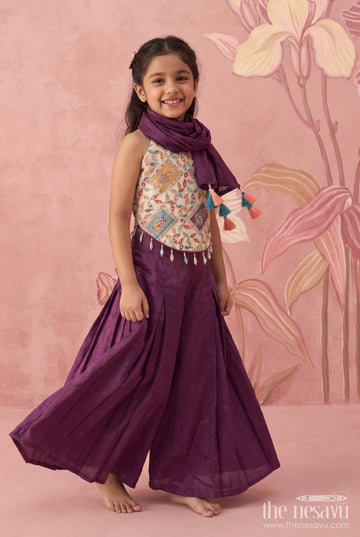
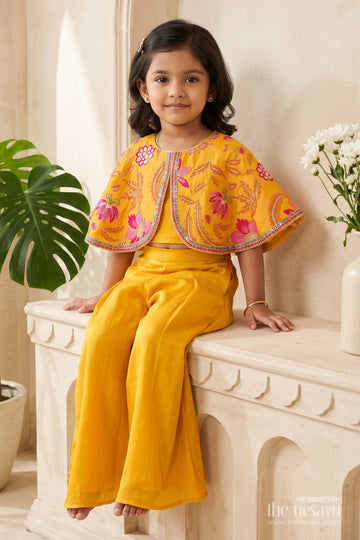
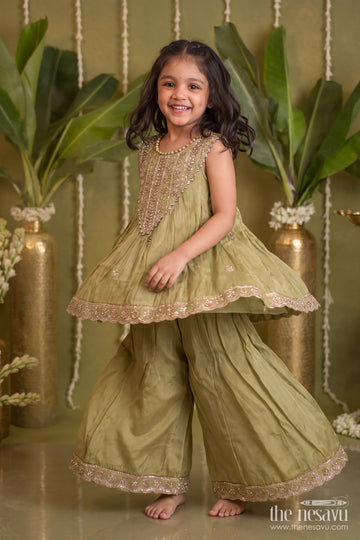
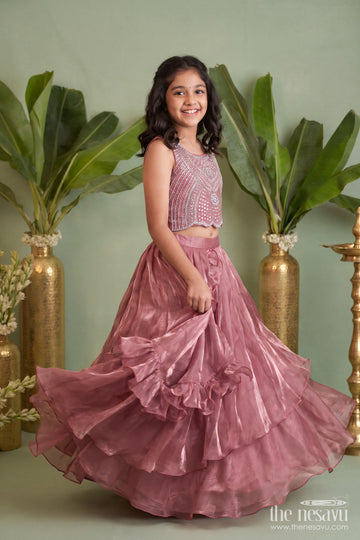
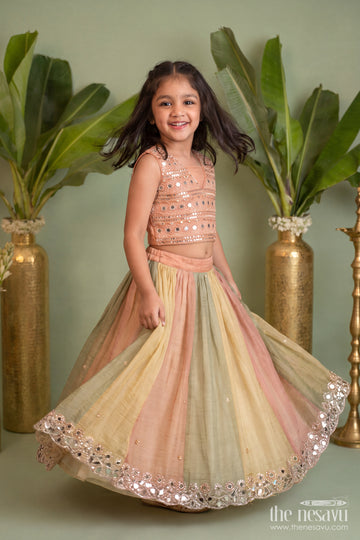
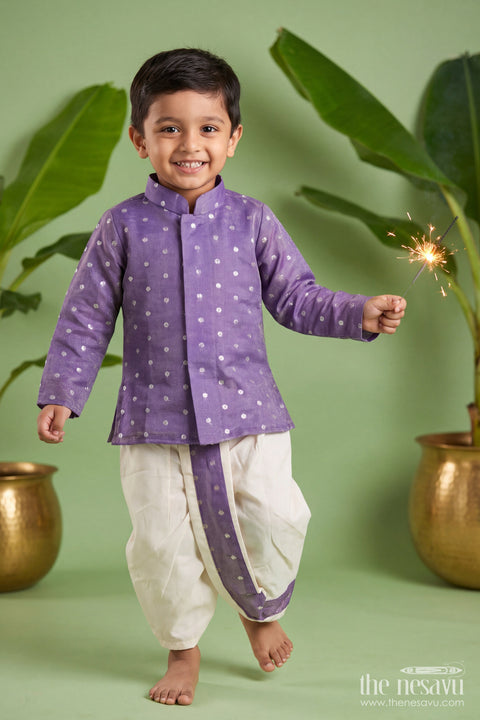
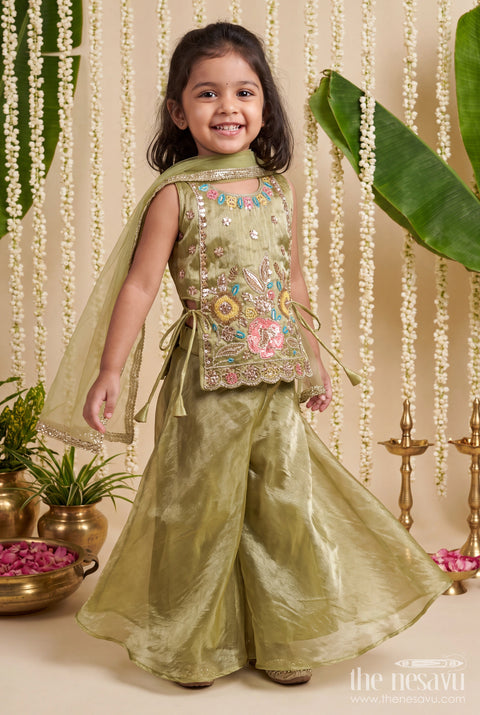
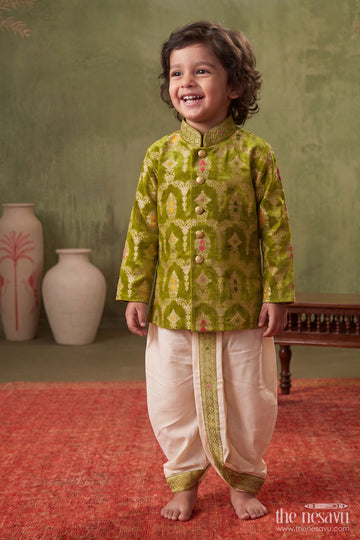
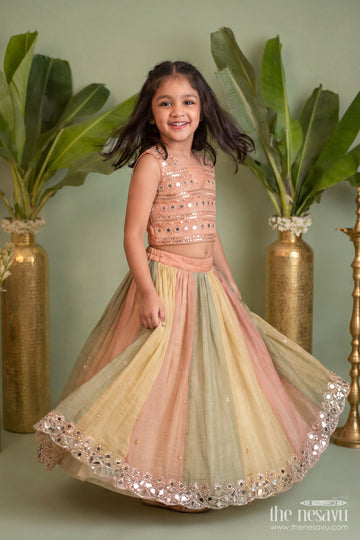
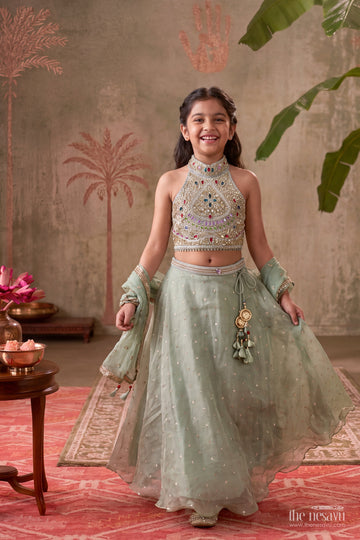
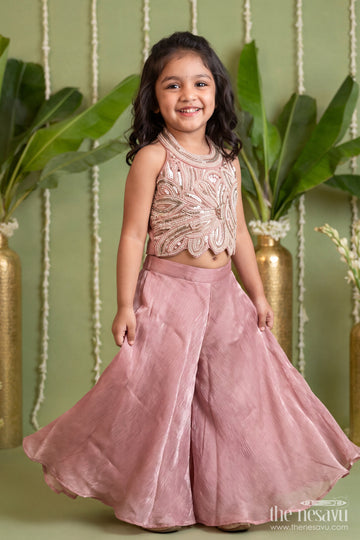
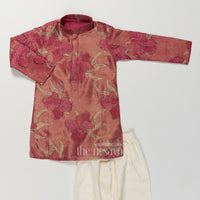
Both. South Indian: pattu pavadai, silk frocks, and vesti and dhoti sets. North Indian: lehenga and ghagra, sharara and palazzo sets, churidar sets, sherwani and kurta sets. See pattu pavadai, lehenga and ghagra and sharara and palazzo sets.
What is the difference between a pattu pavadai and a lehenga?
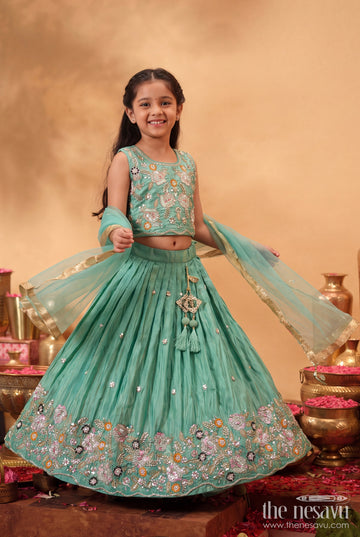
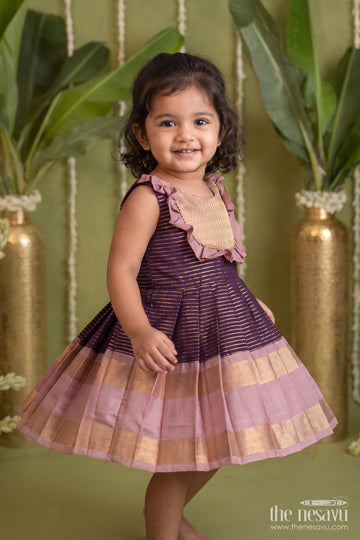
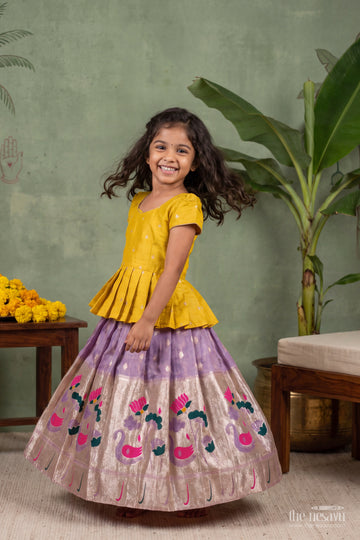
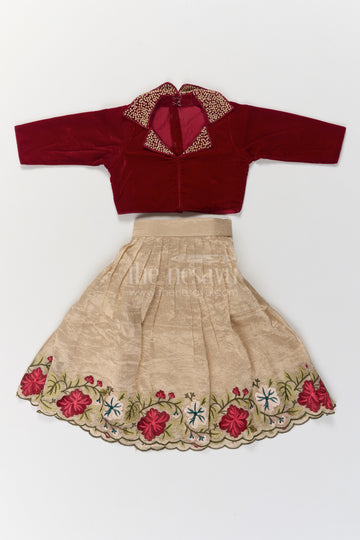
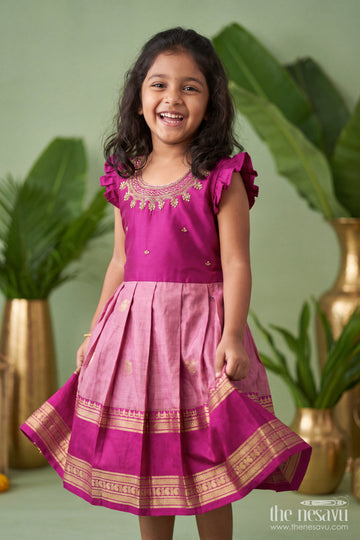
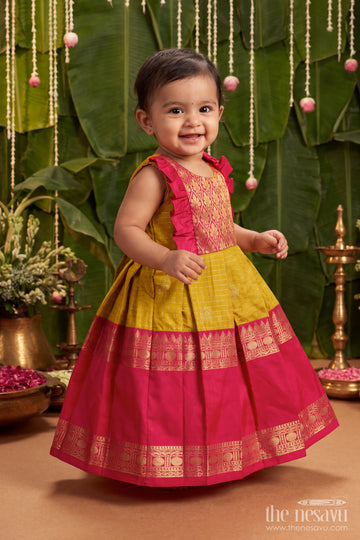
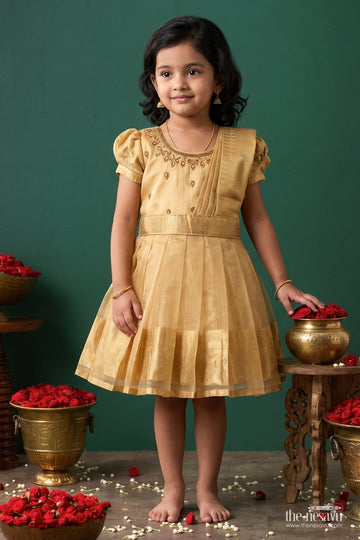
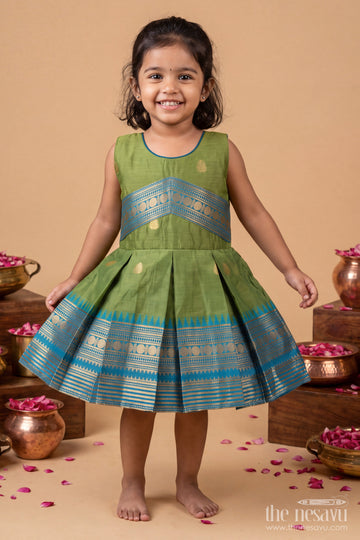
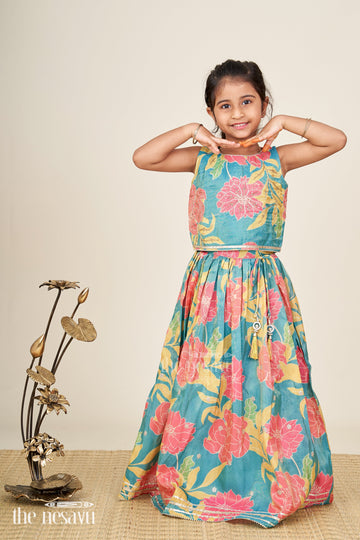
A pattu pavadai is the South Indian form: 'pattu' means silk and 'pavadai' means skirt. It is a silk skirt with a fitted blouse, often in Kanchi or art silk with a contrast zari border, and the customary choice for Tamil ceremonies such as Muhurtham, Pongal and ear-piercing functions. A lehenga is the North Indian form: a flared skirt worn with a choli and dupatta, usually in georgette, net or raw silk, and generally more heavily embellished. The Nesavu carries both.
What do jabla, co-ord set, sharara, butti and zari mean?
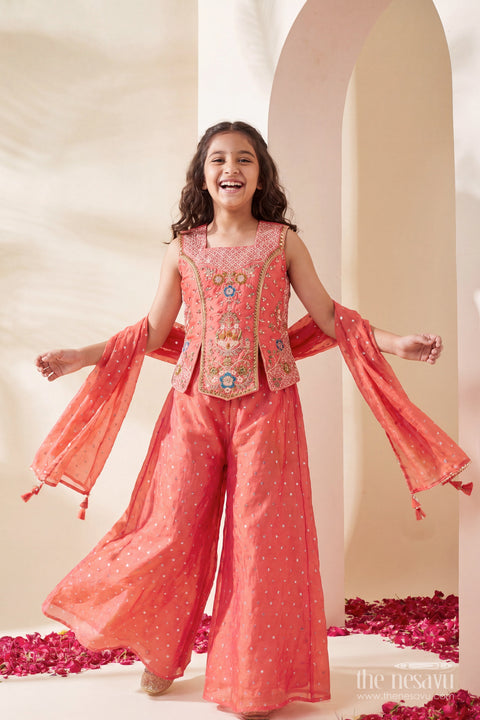
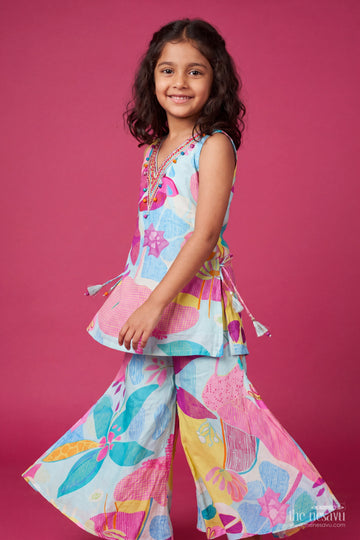
A jabla is a soft, loose baby top, the first thing many Indian babies wear. A co-ord set is a matching top and bottom sold together. A sharara is a flared, wide-leg trouser worn with a short kurta. Butti is a small repeated motif woven or printed across the fabric. Zari is the gold or silver thread used for borders and embroidery.
What is mul chanderi and why is it good for children?
Mul chanderi is a lightweight blend of mul cotton and chanderi. It keeps the softness and breathability of cotton with the subtle sheen chanderi is known for, so it is airy, does not cling and is gentle on young skin in Indian weather. It creases more readily than a synthetic blend, the usual trade-off for a natural fabric. See girls chanderi frocks.
Choosing between two options
Silk or cotton for my 1-year-old's first birthday or temple function?
It depends on how long the day is and how warm it gets. For a short ceremony where photos matter most, silk gives the rich colour and look people expect. For a long day, an outdoor function or a baby who gets fussy in the heat, a soft cotton or mul chanderi outfit keeps her comfortable and still looks festive. Many parents use silk for the ceremony and change into cotton for the rest of the day. See pattu pavadai and chanderi frocks.
Lehenga or sharara set for a girl at a wedding?
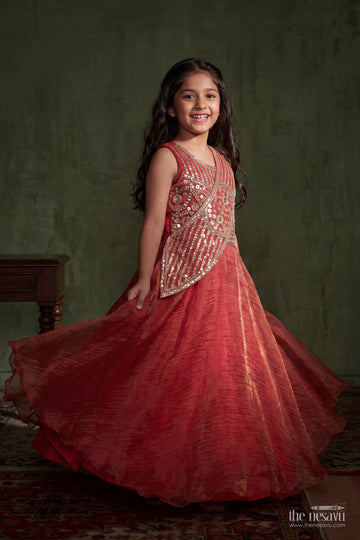
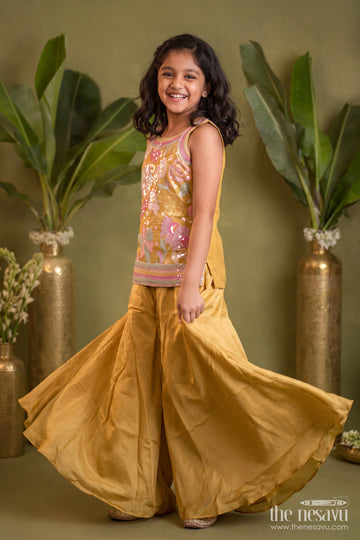
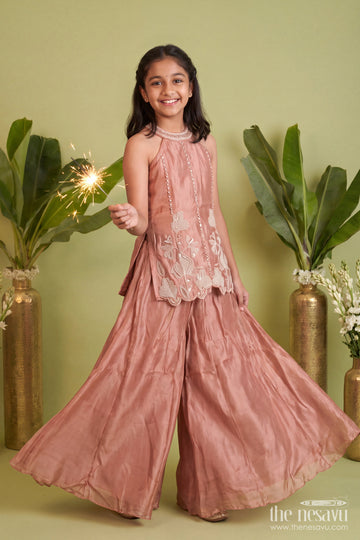
It depends on what she will be doing. A lehenga has a full skirt that looks grand on stage and in photos, but very young children can step on the hem. A sharara or palazzo set keeps the festive look with trousers, so running, sitting on the floor and dancing at the Sangeet are easier. For a girl under four, or a long day of functions, a sharara set is usually the easier choice. See lehenga and ghagra and sharara and palazzo sets.
Kurta set or dhoti set for a boy?
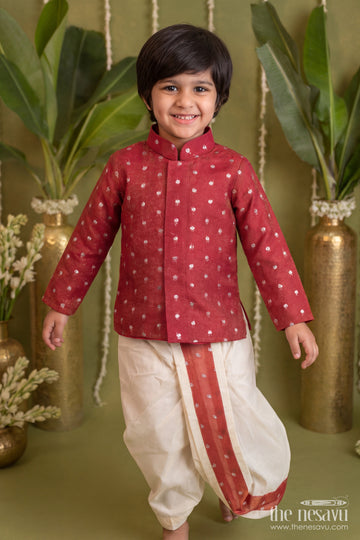
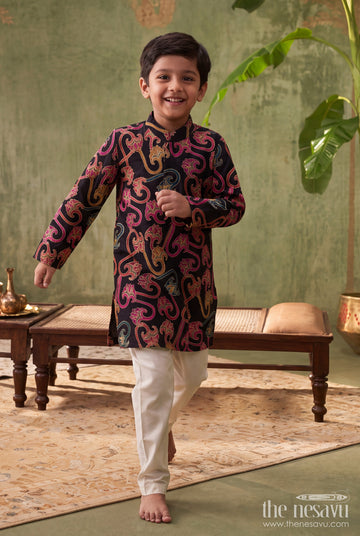
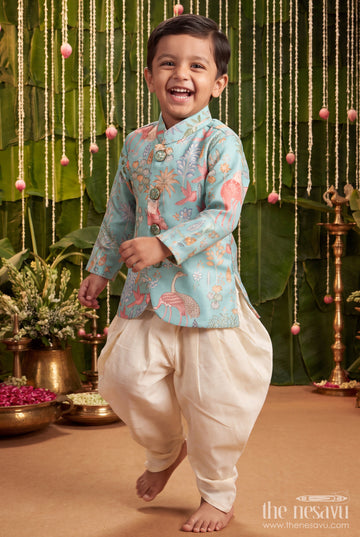
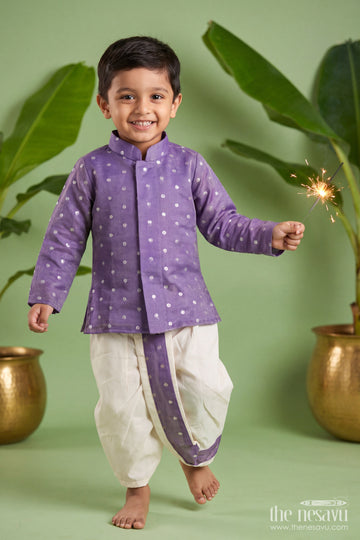
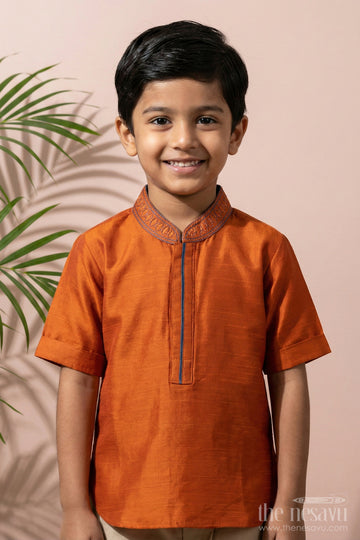
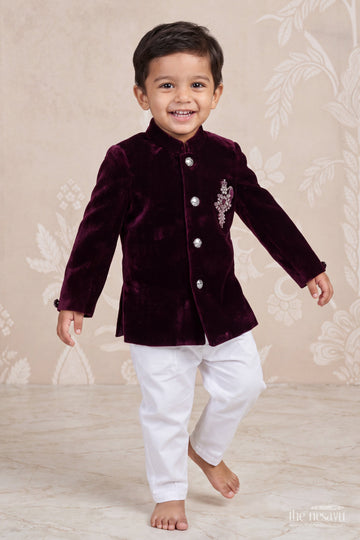
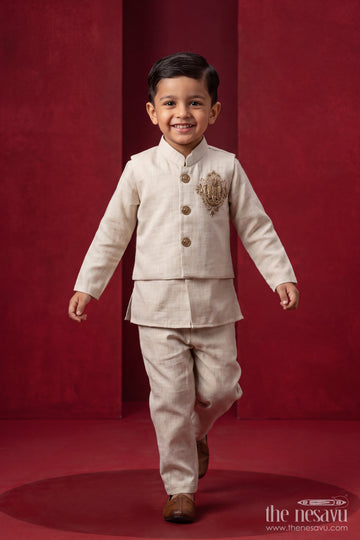
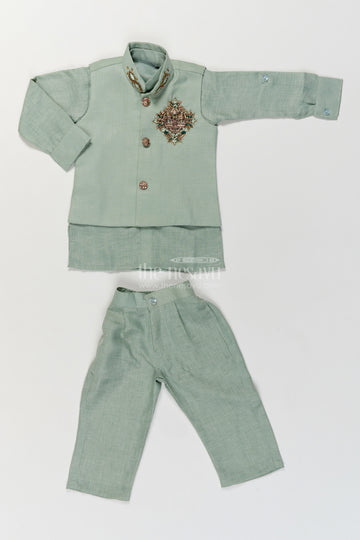
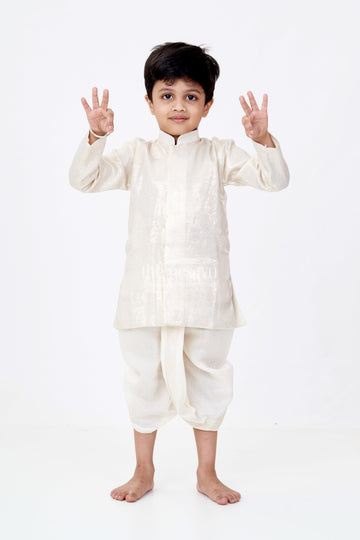
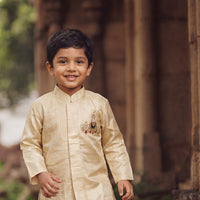
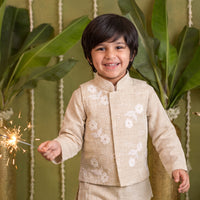
It depends on the ceremony and his age. For Muhurtham, temple functions and other South Indian ceremonies, a silk shirt with vesti or a dhoti set is the traditional choice. For a reception, Sangeet or a long day of travel, a kurta pant set is quicker to put on and easier for toilet breaks with younger boys. If he is under three, pick whichever he will wear without fuss; photos go better when he is comfortable.
Should I buy her current size or one size up?
It depends on when the outfit will be worn. For an event in the next few weeks, buy the size that fits today using the size chart, so it looks neat in photos. For a festival several months away, or a child who is growing fast, one size up is safer. If your child is between two sizes, pick the bigger one. If it does not fit, you can request one free size exchange within 7 days of delivery.
Mul chanderi or pure cotton for everyday wear?
It depends on what you want most. Pure cotton is the easiest to wash and handles daily play and school wear well. Mul chanderi is lighter and has a soft sheen, so it suits outings, small family functions and hot afternoons when you want something a little dressier. It creases more readily than cotton. See girls cotton frocks and girls chanderi frocks.
Weddings, siblings and ceremonies
Can I buy the same design in two different sizes for my two daughters?
Yes. Because The Nesavu holds ready stock across the size range rather than stitching to order, the same design can usually be bought in several sizes at once, for siblings, cousins or a group of children at a wedding. Sibling Sets shows only the designs that have both your children's sizes in stock, for two sisters, two brothers or a brother and sister.
Can I get matching outfits for a group of children at a wedding?
Yes. The same design is typically available in multiple sizes from ready stock, which makes it practical to dress siblings, cousins or the children in a wedding party in matching or coordinated outfits and have them dispatched together. See The Wedding Edit.
What should children wear for Muhurtham, Haldi, Mehendi and Sangeet?
Muhurtham is the most traditional, and silk is customary: a pattu pavadai for girls, a silk shirt with vesti or a dhoti set for boys, usually in gold, red, maroon or deep green. Haldi is a daytime ceremony, so light cotton in yellow or marigold is practical. Mehendi is relaxed and colourful; green, orange and pink work well, and a sharara set lets a child move freely. Sangeet is the evening celebration, where lehengas, sharara sets and embellished gowns suit best. Shop Muhurtham, Haldi, Mehendi and Sangeet outfits.
What should a baby wear for a naming ceremony or first birthday?
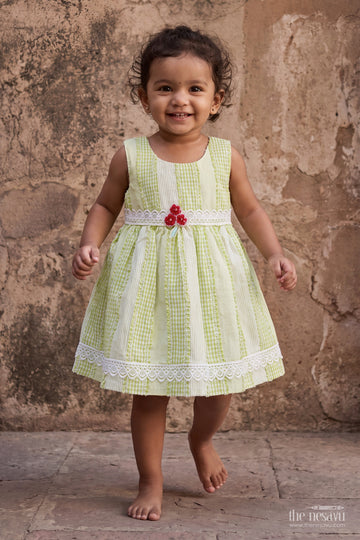
Soft fabrics that are easy to put on: a silk tie-up frock or a light pattu frock for girls, a soft kurta set or jhabla for boys. See naming ceremony outfits and tie-up frocks.
Help, stores and wholesale
How can I reach The Nesavu?
Live chat on the website answers any time, 24/7. Our customer care team is on WhatsApp and phone at +91 80989 91122, Monday to Saturday, 11 AM to 7 PM. Prefer to call? That number works for calls too. For a size exchange, a different design or a question about your order, you can also write to us, or start a return or exchange on the Return & Exchange page.
Where are The Nesavu stores located?
Four showrooms in Tamil Nadu, all open 10 AM to 9 PM daily. Coimbatore: 21/39, Tatabad 3rd Street, Tatabad, 641012, +91 7708869990. Salem: Door No 141/3-3, Narasus Corner, Gandhi Road, Hasthampatti, 636007, +91 7708877688. Tiruppur: Door No. 71, 60 Feet Road, J G Nagar, Kamaraj Nagar, 641602, +91 7708844495. Erode: 50/2, 7th Street, Sangu Nagar, Palayapalayam, 638011, +91 9514435553. Details on our showrooms page.
Does The Nesavu supply wholesale to boutiques and resellers?
Yes. The Nesavu supplies ready stock to boutiques and resellers in India and abroad, including Singapore, Canada and the United States. Indian resellers can collect directly from the showrooms. Send enquiries on WhatsApp or call +91 80989 91122.
About The Nesavu
What does Nesavu mean?
Nesavu (நெசவு) is the Tamil word for weaving. The name reflects where the brand comes from: South Indian textiles, made easy for children to wear.
Who is behind The Nesavu, and where is it based?
The Nesavu is a kidswear brand founded by Uma and Balajee and based in Tamil Nadu, with showrooms in Coimbatore, Tiruppur, Erode and Salem. Read our story.
What is the official website of The Nesavu?
The only official online store is thenesavu.com. Our four showrooms are in Coimbatore, Tiruppur, Erode and Salem.


