























































































Quick answer: Start at about 6 months, once your baby sits with little support and shows real interest in your plate. Begin with one runny, single-ingredient food like rice kanji or ragi porridge, give each new food for about 3 days, and move to thicker textures over the next few weeks. Milk stays the main food for now. Solids are practice.
Before you begin: is your baby ready?
Most babies are ready for first foods at around 6 months. Look for three things together: your baby sits with little or no support, holds the head steady, and watches your food with real interest. One sign alone is not enough. A baby who grabs your spoon at 4 months is curious, but may not be ready to swallow food safely.
Your paediatrician can confirm the right time for your baby, especially if your baby was born early. Until the first birthday, breast milk or formula remains the main food. Think of the early weeks of solids as tasting, touching and learning to move food around the mouth.
The 8-week plan at a glance
Give each new food for about 3 days before adding another. That way, if your baby gets a rash or loose motions, you know which food to look at. Cook everything without salt, sugar or honey. Here is a gentle order that uses foods already in most Indian kitchens.
- Week 1: Thin rice kanji, then thin ragi porridge. Start with 1 to 2 teaspoons, once a day.
- Week 2: Steamed, mashed pumpkin, then carrot. Smooth and runny.
- Week 3: Ripe banana mashed with a fork, then steamed apple.
- Week 4: Moong dal water, then a thin dal mash.
- Week 5: Soft moong dal and rice khichdi, then sweet potato mash.
- Week 6: Ripe papaya or chikoo, and cooked palak blended into khichdi. Leave a few soft lumps.
- Week 7: A piece of idli mashed with dal water or vegetable stock.
- Week 8: A spoonful of plain curd set at home, plus soft finger foods like steamed carrot sticks.
Amounts grow slowly, from a few teaspoons to a few tablespoons. Your baby's appetite will change from day to day, and that is normal.
How to feed, step by step
- Seat your baby upright in a high chair or on your lap. Never feed a baby who is lying back or half asleep.
- Pick a calm moment when your baby is awake and happy. If your baby is very hungry, give a little milk first, then food.
- Use a small, soft spoon. Let your baby touch the food and the spoon too.
- Stop when your baby turns away, closes the mouth or starts playing with the food. Do not coax, trick or force.
- Offer small sips of boiled and cooled water from an open cup with meals. Ask your paediatrician how much.
- Wash hands, bowls and spoons. Cook fresh when you can, and do not keep leftovers that have sat out in the heat.
Moving on to thicker textures
Do not stay on smooth purees for too long. Around 7 to 8 months, move to a thick mash with soft lumps. By about 9 months, most babies can manage minced food and soft finger foods like steamed vegetable sticks or banana pieces. By 12 months, many babies can eat the family meal, cooked soft, chopped small and mildly spiced.
Foods to hold back for now
- Honey: not safe before 12 months, even a small taste.
- Added salt and sugar: take baby's portion out before you season the family pot.
- Whole nuts, whole grapes and hard raw pieces: these are choking risks. Grind nuts finely, cut grapes lengthwise and cook hard vegetables soft.
- Cow's milk as the main drink: small amounts in cooking are usually fine. Ask your paediatrician about the right time to switch.
- Packaged snacks and fruit juice: whole fruit is better than juice.
Gagging is not choking
Gagging is noisy. Your baby may cough, go red in the face and have watery eyes while pushing food forward. It looks scary, but it is the body protecting the airway. Stay calm and let your baby clear it. Choking is silent. If your baby cannot cough, cry or breathe, get emergency help immediately. It is worth learning infant first aid from a trained instructor before you start solids.
When to call the doctor
- Hives, swelling of the lips or face, or repeated vomiting soon after a new food
- Wheezing or any trouble breathing. Go to emergency care at once
- Blood in the stool
- Diarrhoea or constipation that goes on or seems painful
- Refusing nearly all foods for several days, or concern about weight gain
- Any rash that worries you
If there is eczema or a food allergy in your family, speak to your paediatrician before introducing common allergens like egg, nuts and fish. This article is general information, not medical advice.
Free printable
Our free Baby's First Foods Planner has the 8-week plan, texture and amount guide by age, safety basics and a tick-off tracker for every new food. Print it and stick it in the kitchen.
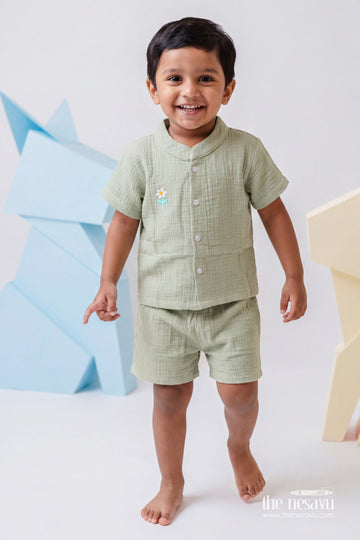
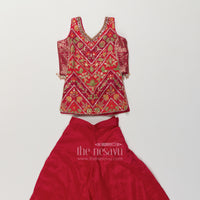
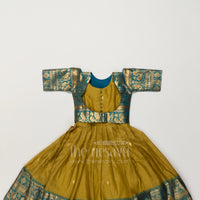
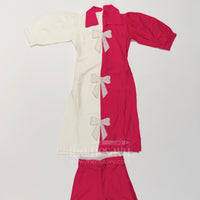
Mealtimes are messy. Keep a few soft, easy-wash cotton outfits just for food days. You will find sizes from newborn to 3 years in our baby collection.
Frequently asked questions
Can I start solids at 4 months?
Most health bodies suggest waiting until about 6 months. Only start earlier if your paediatrician advises it for your baby.
What is the best first food for an Indian baby?
Thin rice kanji, ragi porridge, or a smooth mash of pumpkin, carrot or banana are common first foods. Start with one food at a time and wait about 3 days before adding another.
How do I know if my baby is allergic to a food?
Hives, swelling of the face or lips, repeated vomiting or wheezing soon after a new food can be signs of an allergy. Call your doctor, and go to emergency care straight away if breathing is affected.